It’s no surprise that there are countless benefits of an interscholastic athletic program.
The New York Public High School Athletic Association has mapped out its mission statement. Read more below.
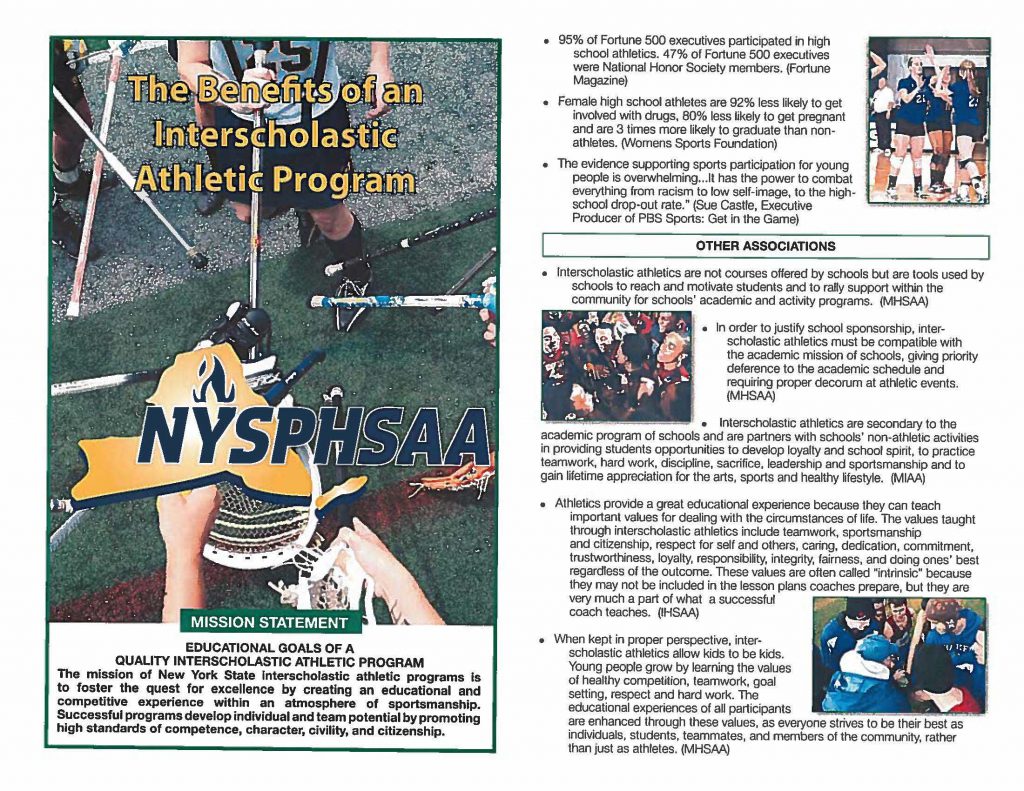
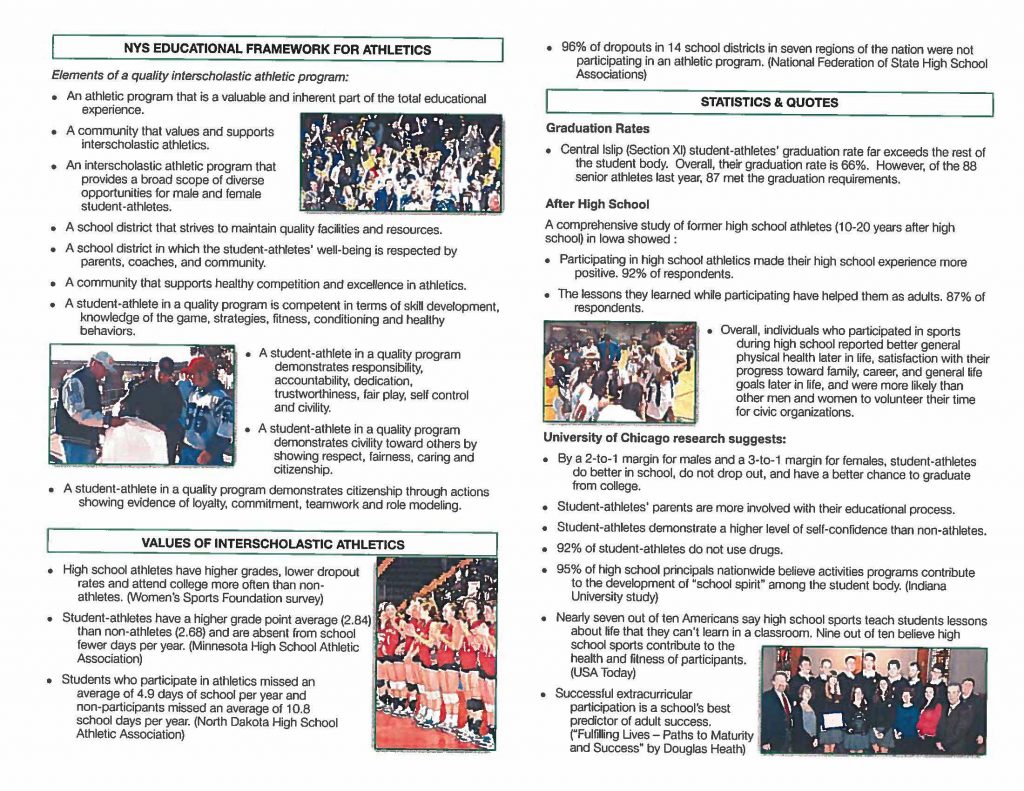
It’s no surprise that there are countless benefits of an interscholastic athletic program.
The New York Public High School Athletic Association has mapped out its mission statement. Read more below.
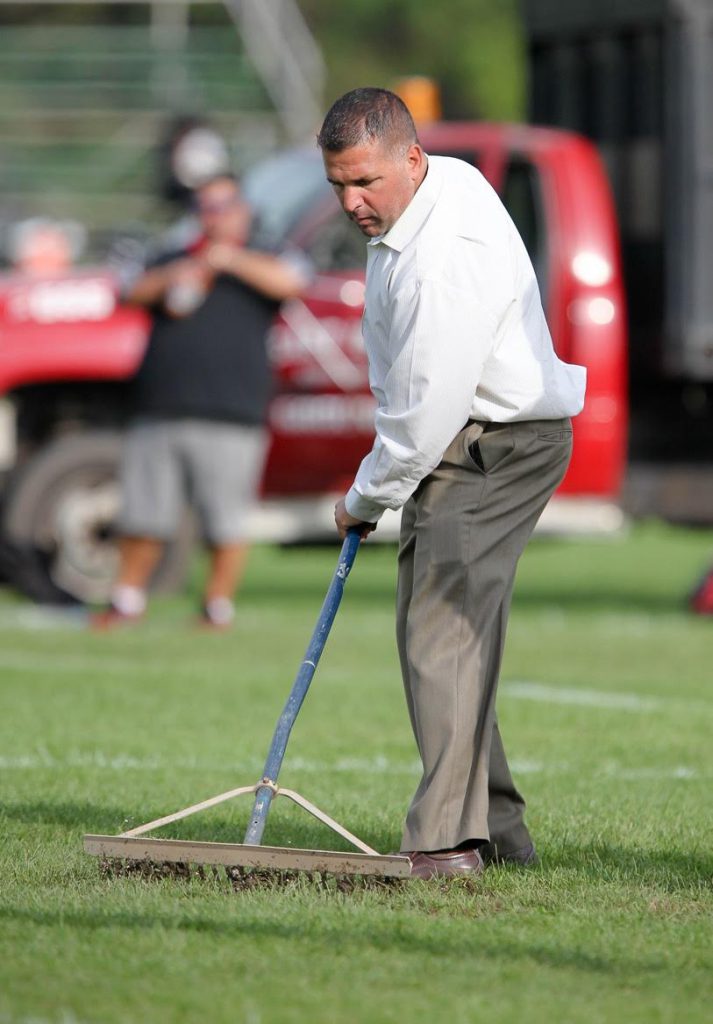
A photo says a 1,000 words. This is East Islip Athletic Director Steve Restivo a few weeks ago helping tend to the field at his school in dress pants.
Our athletic directors in Suffolk County do so much for their schools.
Thanks to all of them for their unrivaled work ethics!
(Photo Credit Bob Sorensen)


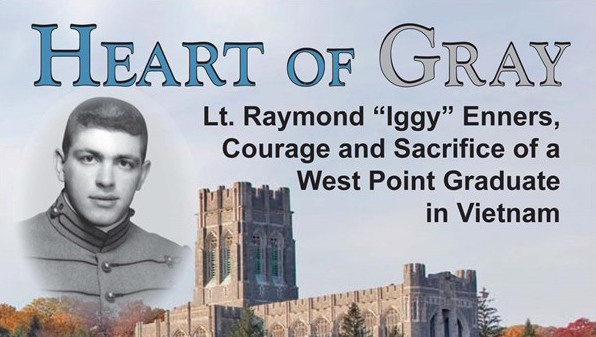
There is a new book about the life of Long Island native and Hills alum Raymond J. Enners.
Heart of Gray was written to honor Enners who, after graduating from the United States Military Academy at West Point, served his country with the Americal Division in Vietnam, where he was killed in the line of duty at the age of twenty-two.
A natural leader, Ray was a world class football and lacrosse player who won honors in high school and later won honors playing lacrosse at West Point. Today, the USILA annually presents the First LT. Raymond J. Enners Award for the best intercollegiate lacrosse player in the nation-some call it the Heisman Trophy of lacrosse.
Heart of Gray presents a gripping account of his distinguished life…from his formative high school years, through his cadet life at West Point where he honed his leadership skills, to the events leading to his death in the paddy fields of Vietnam where he earned the Distinguished Service Cross, the nation’s second highest award for valor.
Written by his younger brother Rich, who is also a West Point graduate, Heart of Gray embodies the ideals of Duty, Honor, Country learned by every member of the Long Gray Line—a code that Ray Enners embraced and is still being taught to future leaders of America’s military.
CLICK HERE TO PURCHASE THE BOOK!
About the Author
Richard Enners grew up in Farmingdale, Long Island, New York, graduated from the United States Military Academy at West Point in 1971, and served five years in the Army with the 9th Division in Fort Lewis, Washington and the United States Military Academy Preparatory School in Fort Belvoir, Virginia. He later pursued a career in business, initially sales and marketing, and eventually led companies with revenues of $60M-$120M in Japan, British Columbia, and the USA.
Praise
“The very core of leadership is character. Throughout Heart of Gray you will experience character at its finest, from the roots of Ray’s youth to his values-based leadership approach on the fields of battle.” —Mike Krzyzewski, Head Coach, Duke University Men’s Basketball
“Success in all team sports relies on great leadership and supporting the concept of TEAM by contributing to something greater than yourself. Lt. Raymond Enners embodied these values on the playing field and in life. Heart of Gray reveals Lt. Enners’ exceptional characteristics through his heroic actions and daily life. A truly inspirational story and legacy.” —Chuck Mitrano, President, United States Intercollegiate Lacrosse Association and Empire 8 Commissioner
“The story of Raymond Enners is an inspiring illustration of how commitment and duty to others learned through athletics, family, and education captures the essence of great leadership evolving through selflessness, dedication, and humility. The life lessons learned by Raymond Enners through participation in athletics are compelling in his actions of bravery and heroism as he made the ultimate sacrifice for his team. Heart of Gray provides a true appreciation of the special person that Raymond Enners became during his lifetime.” —George Searing, President, Suffolk County Lacrosse Coaches Association
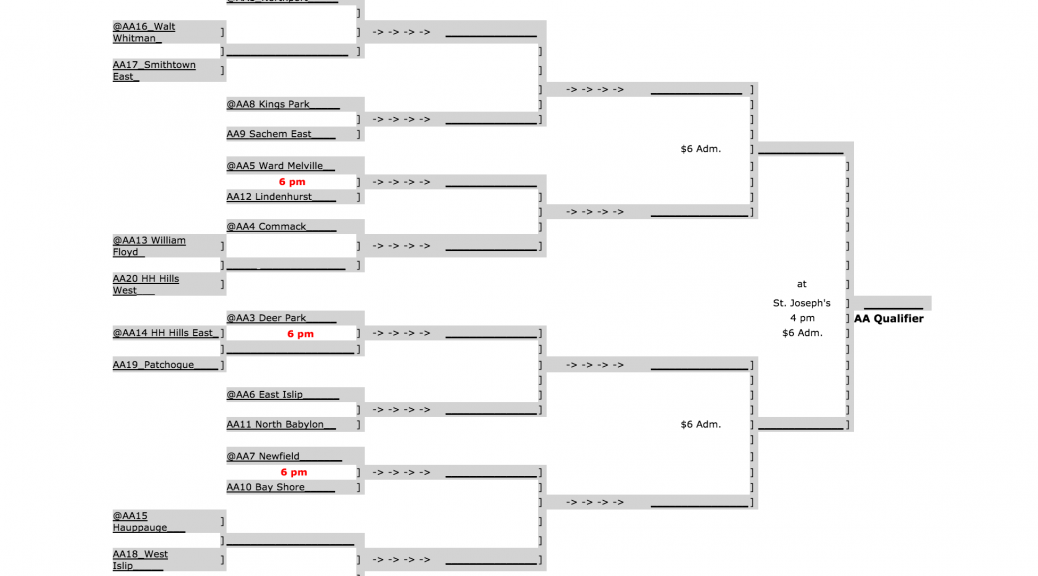
The brackets for the Suffolk County girls playoffs are officially available.
Games begin on Friday, October 21.
Top seeds in this year’s tournament
Ward Melville, Miller Place and Pierson/Bridgehampton are the top seeds in this year’s Section XI field hockey playoffs, which kicked off on Friday afternoon.
The Section XI boys soccer playoff brackets have been officially released.
Top seeds in this year’s brackets:
Two student-athletes from Section XI have been selected for the New York State Public High School Athletic Association, Inc. (NYSPHSAA) 2017 Student-Athlete Advisory Committee (SAAC).
Jensen Corabi from Half Hollow Hills West and Paige Volkmann from Central Moriches High School will represent Suffolk.
The SAAC was developed to give student-athletes a voice within the NYSPHSAA. Over the course of the school year, the committee will discuss topics relevant to high school student-athletes and develop ways to maintain a positive athletic experience.
“The mission of our organization revolves around the development, safety and participation of student-athletes in our programs and we are excited to finally have in place a Student-Athlete Advisory Committee (SAAC),” said NYSPHSAA Executive Director, Robert Zayas. “This committee will be critical in providing feedback to further enhance and improve our programs with our member schools. We are looking forward to bringing in an outstanding group of student-athletes and getting to work with them.”
Things are starting to heat up in Suffolk County athletics. Some sports are already in the post-season, while others have teams vying for seeds and placement.
This is the perfect opportunity for you to block your calendar and plan on attending some playoff and championship action this call.
For all championship info, please review our fall championship schedules by clicking here.
For all playoff brackets, stay locked into our brackets page by clicking here.
Good luck to all student-athletes, coaches and teams this post-season and thanks for making us proud!
Being an athletic director within your district has many rewarding experiences and opportunities. From the day-to-day interactions with your coaches and athletes to the struggles and triumphs of a long season. While athletics are usually measured by the ultimate results, success can be measured in multiple modalities.
While championship expectations may not always be realized, positive experiences can always be reinforced and actualized for a team and its members. Coaches may not realize they may be the lone component of how a student-athlete perceives their experience. Coaches must realize that their actions and guidance will remain with their student athlete long after graduation. It is important to remember that as an athletic director you are responsible for the oversight of the entire program. While no two coaches are alike, it is also important to realize that not all athletes and teams are alike. With that, it is important to realize that while we strive for excellence there are many ways to reach our student-athletes.
While this daily process is all contained within the boundaries of our towns, Section XI offers athletic director’s a chance to be involved at the county, state and national level. For the past 15 years, while serving as the Islip athletic director, I have enjoyed and relished my roles within the most successful governing body of athletics in New York State, Section XI. While many of the roles necessary for the operation of a successful sport season and the entire High School athletic process, are done for no money, the big Blue Machine of Section XI would cease to operate without the dedication of the 61 athletic directors in Suffolk County. Throughout the years I have been a member of the Constitution Committee, Placement Committee and served as the Conference III President. While these committees sometime require time out of district, it is essential that we as athletic administrators, stay involved as the entire process would cease to exist as we know it.
These committees are the backbone of Suffolk County Athletics. My current responsibilities include serving on the Seeding Committee, which seeds every post season event in the Section. As a member of the Safety committee, chaired by Bayport athletic director Tim Mullins, we meet to examine all aspects of safety procedures for all Athletics. I currently sit as a member of the Section XI Athletic Council which approves and disapproves all proposals and current rules and regulations within the operations of Section XI. Over the past 10 years I have cherished my position as a member of the New York State Wrestling Committee and am proud to be a part of the most dedicated coaches within the Suffolk County Wrestling Coaches Association which has now won 8 Inter Sectional State Championships in a row. As my term as the President of the Suffolk County Athletic Directors Association comes to a close next March, I am grateful to be a part of such a dedicated group of professional men and women that I am proud to call my colleagues and friends. The past Executive Leadership of W. Homer Ball, Joseph Barlin, Cathy Gallagher and Ed Cinelli have laid a blue print for the continued success of Section XI and our current Executive Director, Don Webster, continues to lead us not only throughout the state but also at the national level.
The athletic directors in my association are the most dedicated and committed professionals that I have had the pleasure to work with. It is a fraternity of dedicated men and women who truly believe that athletics is truly an extension of the classroom and that lessons learned in the gyms and on the fields will provide our student athletes with the experiences to guide them throughout the rest of their lives.
Bob Panariello, CMAA
President – Suffolk County Athletic Directors
Director of Health, Physical Education and Athletics Islip Public Schools